
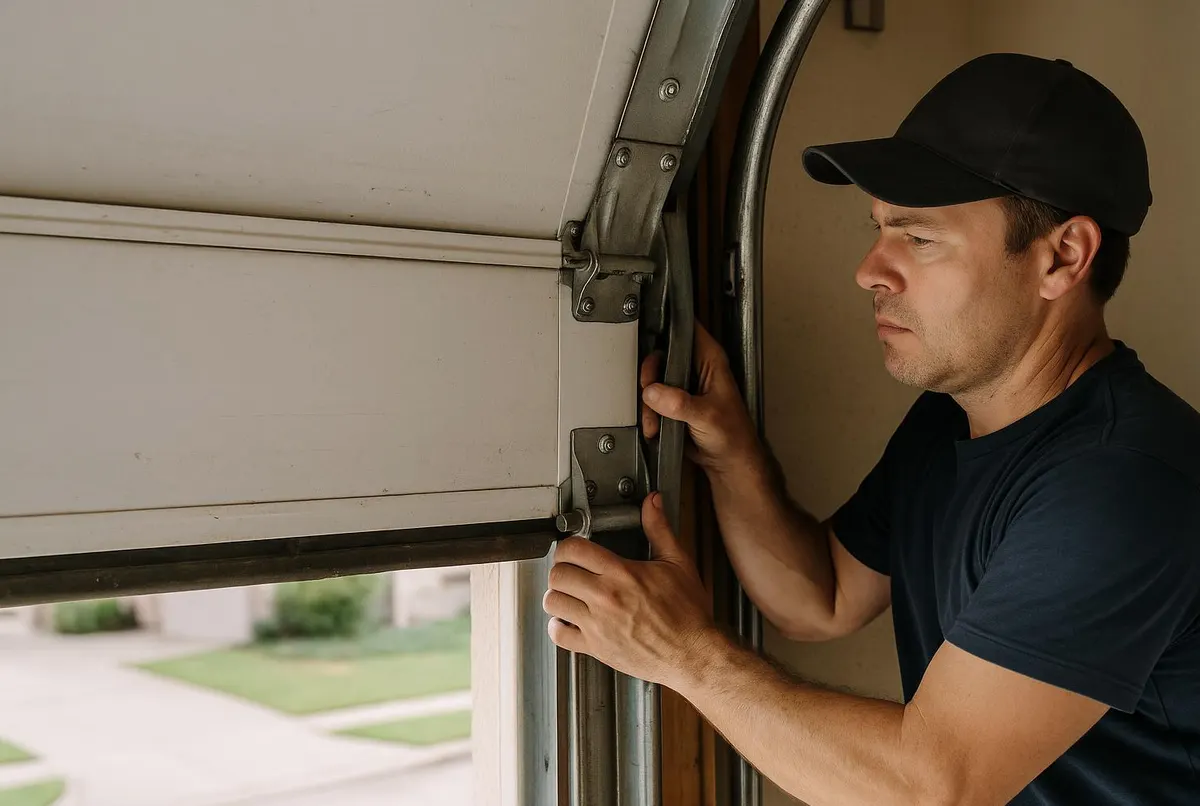
It usually starts the same way: someone's standing in the driveway waiting for the door to finish its slow, groaning climb, and they say "this thing is on its last legs." The other person says it's "fine, it's only a few years old." Nobody actually knows the number. Here's the number.
How long should a garage door and opener actually last?
A garage door itself — the panels, track, hinges, and springs — typically lasts 15 to 30 years with reasonable care. Steel doors on the higher end if they're not taking direct salt spray or constant moisture; wood or composite doors can swing lower if they're not sealed and maintained.
The opener is a different machine with a different clock. Most openers last 10 to 15 years. The motor, gears, and circuit board wear out well before the door itself does, which is why a 20-year-old door can still look great while running on its second or third opener.
Springs are their own category entirely. They're rated by cycles (one cycle = open plus close), and under normal use that works out to roughly 7 to 12 years. Heavy daily use — multiple vehicles, kids in and out, a home business — shortens that math fast.
What actually shortens all of this in Tampa
This is where the local weather stops being background noise and starts being the deciding factor:
- Humidity and moisture. Constant dampness swells wood doors, warps panels, and works its way into seams on steel doors where paint has chipped. Swelling that isn't caught early turns into binding, which strains the opener motor.
- Salt air. Homes nearer the coast see faster corrosion on hinges, rollers, tracks, and spring coils. Rust doesn't just look bad — it adds friction that makes every part work harder than it should.
- Heat cycling. A garage that bakes all afternoon and cools at night puts repeated stress on seals, weatherstripping, and the metal itself, which accelerates wear on top of normal aging.
- Storm wind load. Garage doors are one of the most common failure points during high-wind events because a large door takes a lot of pressure. Doors not rated or reinforced for wind load flex more over repeated storms, even when they don't fail outright, and that flexing fatigues panels and hardware over time.
- Afternoon downpours and standing water. Water pooling at the bottom of the track or threshold accelerates rust at exactly the point where the door meets the ground — often the first place damage shows up.
What extends it
- Lubricate hinges, rollers, and springs every few months with a silicone-based lubricant — not household oil, which attracts grit.
- Wipe down tracks and check for rust after heavy storms, especially if the garage faces prevailing wind and rain.
- Test the balance by disconnecting the opener and lifting the door halfway by hand. It should stay put. If it drops or shoots up, the springs are compensating incorrectly and wearing out faster.
- Keep weatherstripping intact. A cracked or missing seal lets humidity, bugs, and water into the garage, which affects everything stored in there, not just the door.
- Don't ignore a struggling opener. A motor working harder than it should — grinding, hesitating, reversing for no reason — burns itself out faster and can be a sign the door itself is out of balance or binding.
So, who wins the argument?
If the door is under 15 years old, free of rust and swelling, and opens smoothly without the opener straining, it's not old — it just needs maintenance. If it's pushing 20-plus years, has visible rust at the bottom panel, or the opener is the original from installation, age is a legitimate factor in the conversation, not just an excuse to buy a new one.
When to call Tampa Garage Door
If the door is sagging, binding, or making the opener work overtime, that's a job for Garage Door Repair or, if the springs are the root cause, Spring Replacement — springs are under heavy tension and aren't a DIY fix. If the door is well past its reasonable lifespan or has storm damage that keeps recurring, a technician can walk through whether Garage Door Installation makes more sense than another round of patch repairs, including options built for Florida's wind-load conditions.
If something in your garage has been bugging you for months, settle it for real. Call Tampa Garage Door and get a straight answer for your home in Tampa, FL.